Tuesday, March 4, 2014
Congratulations San Diego on Saving the Fire Pits!

The cost to preserve and maintain these beach fire pits is around $150,000 per year, and the agreement reached, leaves the city responsible for only $30,000 of the cost with the remainder being picked up by the tourism and non-profit groups.
Thats the good news, the bad news is that no long term agreement has been reached, stated Councilman Kevin Faulconer, but that a deal was in the works for a long term agreement to fund the maintenance so this issue wont be on the table each year.
So keep your fingers crossed on that.
But congratulations San Diego on overcoming this first hurdle, were rooting for you!
For all of your fire pit needs come check us out.

Monday, March 3, 2014
Save Money While Consuming Half the Gas

Some of you may think this is a post regarding the high gas prices at the pump. It is not. It is a post regarding how you can cut your natural gas or propane consumption in half by utilizing a Warming Trends Crossfire Burner System vs. a traditional fire ring for your outdoor fire pit.
Our Burner System’s regulator was developed with a precise air to gas mixture ratio which produces a taller, brighter flame while using only half the fuel of conventional fire rings. This cutting edge technology has allowed our product to out perform all others on the market.
Warming Trends patented technology is unique only to our system which allows you the benefit of offering you gas savings rewards. THINK GREEN! Stop using those old fashion fire rings and move into the future.
Below, owner, Ray Stone talks about the effectiveness of the Crossfire Burner and you can see first hand the difference you get out of the flame compared to a conventional fire ring:
Not only will you be saving money by burning half the gas, our burners stand up to the elements compared to traditional fire rings as well. Head welder and fire pit manufacturer, James Dimasi shows us the difference between our custom burning systems and fire rings:
So when you are ready to invest in saving money (get it? its a play on words) and move into the future, please contact us online, or call today! 1-877-556-5255.
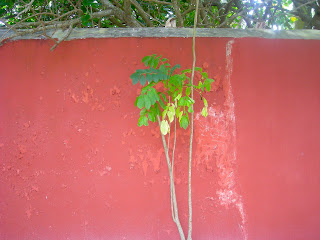
The Architectural Colors of Merida Mexico
Click First Image




The Top 6 Aliens To Watch Out For
Ive recently joined Sprig as a guest blogger, and have written a post about an extremely important subject for us here in South Africa - Alien Invasive Plants. You may have noticed a few posts about the subject here before. I wrote about the efforts to control them through biological agents, and the differences between exotic and alien plants
Its important to be able to recognise them, so that you can eradicate them as quickly as possible. So here are some pictures of the most dangerous aliens to be on the lookout for where I live - in Kwazulu Natal, South Africa:
1. Chromolaena odorata - Triffid Weed - This plant spreads like wild-fire, because it seeds itself when it is still young, but it is easy to pull out when its still small.

2. Litsea glutinosa - Indian Laurel - I think this is our biggest threat here in KZN. Under a single tree, thousands of saplings shoot up. They grow at a rapid pace, and are difficult to pull out, even when small.

3. Cardiospermum grandiflorum - Balloon Vine - Grows up into the tops of trees extremely quickly, and spreads its seeds out of sight. Easy to spot and pull out when its still small.

4. Lantana camara - Dont confuse this with the hybrid, which is safe to plant. Easy to uproot when its still small.

5. Melia azederach - Syringa - Like Litsea, it grows quickly and is hard to remove even when small.

6. Schinus terebinthifolius - Brazilian Pepper - It used to be planted as a fast-growing hedge, because of its pretty berries, but soon became a pest.

Now that you know how to recognise them, take a walk through your garden, and pull them out as quickly as possible...
You can also download a pdf list of all the Invasive Alien Plants of South Africa.